The best website builder for a UK small business in 2026, with real UK prices
Wix, Squarespace, Shopify, WordPress and Hostinger compared for UK small businesses, with the real UK prices, transaction fees and renewal costs each one charges.
By GP 13 minute read
TL;DR: The best website builder in the UK depends on what the site must do. Squarespace or Wix suit a simple brochure site from about £9 to £17 a month, Shopify suits a business that mainly sells products from £19 a month, and WordPress suits a site you want to own and grow. Check renewal prices and card fees, not just the first-year offer.
Key takeaways
- WordPress runs 40.0% of all websites, according to W3Techs figures for 14 October 2026.
- Wix plans in the UK run from £9 to £119 a month on yearly billing, before tax.
- Squarespace charges £12 to £79 a month on annual billing, with a 2% fee on store sales on its cheapest plan.
- Shopify Basic costs £19 a month on yearly billing, and card payments start at 2% plus 25p.
- Introductory prices can double or triple at renewal, so compare the price you will pay in year two.
What is the best website builder in the UK for a small business?
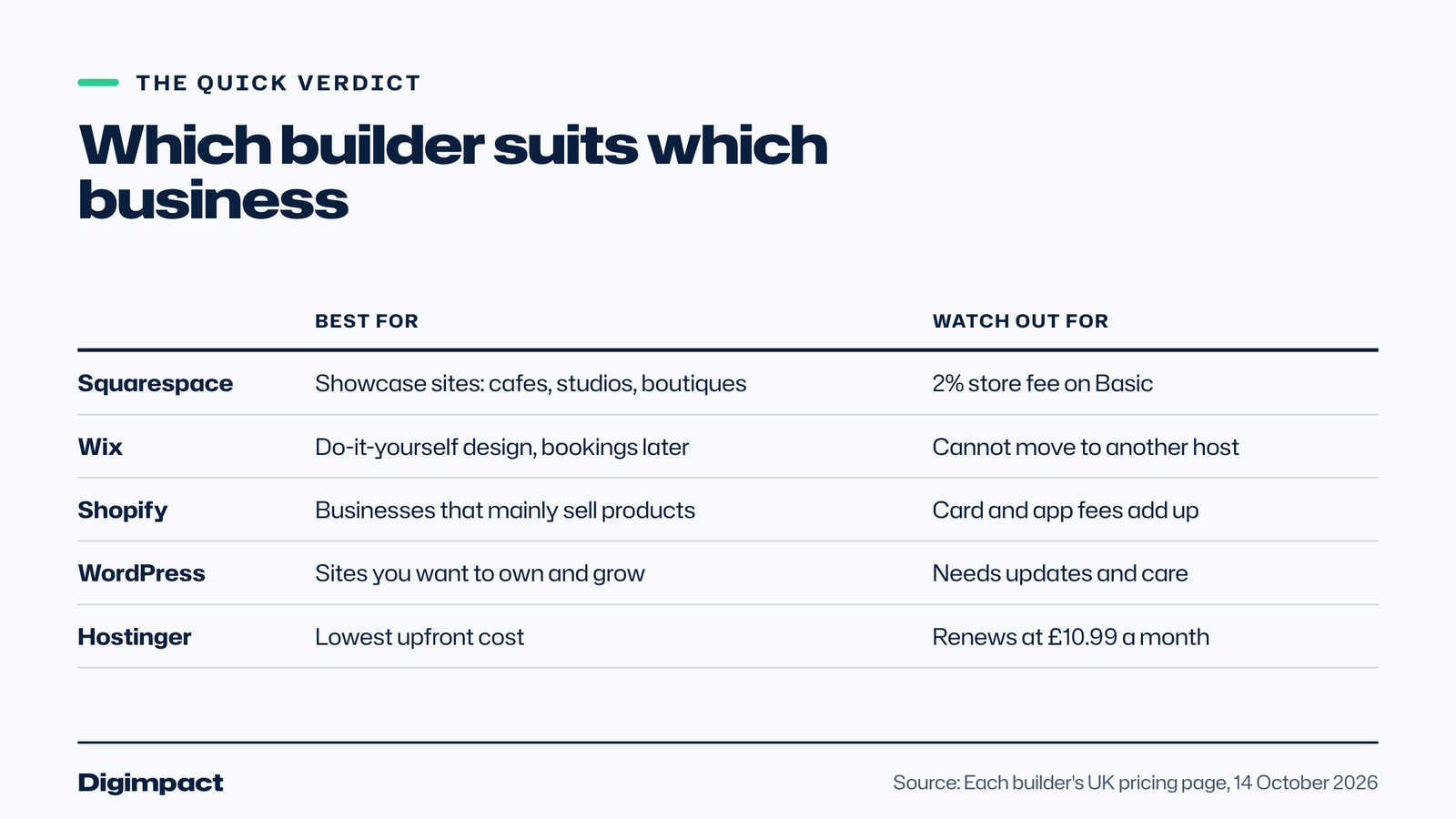
There is no single best website builder in the UK for every business. For a simple site that shows your services and takes enquiries, Squarespace and Wix are the easiest. For a business that mainly sells products online, Shopify is the strongest. For a site you want to own, extend and move between hosts, WordPress is the most flexible.
The right answer comes from four questions: what the site must do, which website builder fits that job, who will update it, and what it will cost over three years rather than one. A cafe that needs opening hours, a menu and a booking link has different needs from a clothing boutique with 300 products or a plumber who wants to rank in five nearby towns.
We build websites for a living, mostly on WordPress, so read this with that in mind. We have still tried to be fair, because the wrong platform costs a small business far more than our fee does. Every price below was checked on each website builder’s own UK pricing page on 14 October 2026.
How much do website builders cost in the UK in 2026?
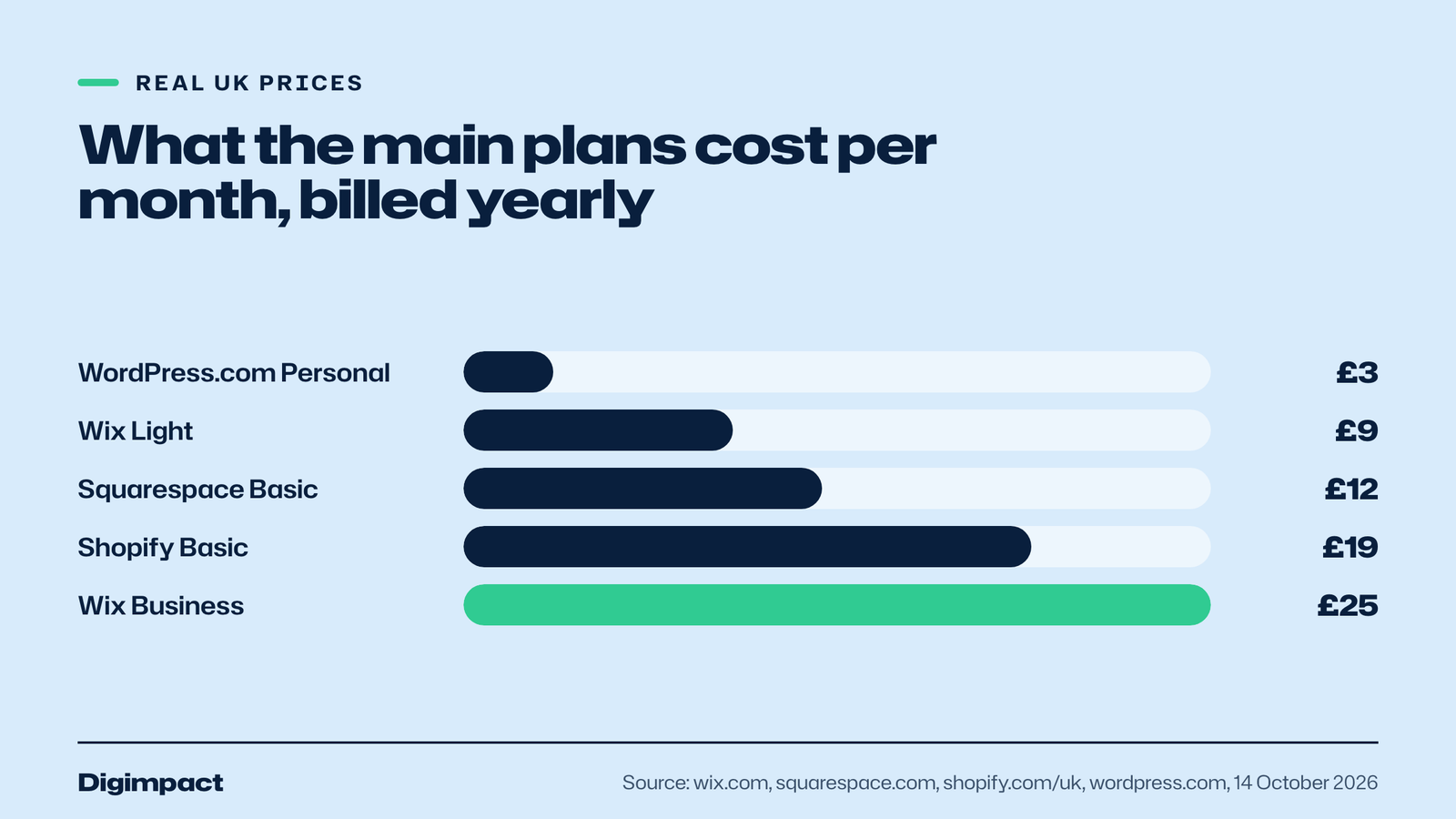
Website builder prices in the UK in 2026 run from about £3 a month for a basic WordPress.com plan to £25 a month for a Wix business plan and £19 to £259 a month for Shopify. Most quote a monthly price that is only available if you pay for a full year upfront, and several add VAT at checkout.
Here are the main plans for each website builder, as listed on each company’s UK pricing page:
| Builder | Cheapest paid plan | Plan most small businesses need | Billing basis |
|---|---|---|---|
| Wix | Light, £9 a month | Business, £25 a month | Yearly, before tax |
| Squarespace | Basic, £12 a month | Core, £17 a month | Annual |
| Shopify | Basic, £19 a month | Basic or Grow, £49 a month | Yearly (Basic is £25 paid monthly) |
| WordPress.com | Personal, £3 a month | Business, £20 a month | Yearly, before tax |
| Hostinger Website Builder | About £2.99 a month on a 48-month term | Renews at £10.99 a month | 48 months upfront |
The headline number is rarely what you pay. Wix states that its displayed prices are for yearly subscriptions paid in full and exclude applicable taxes. WordPress.com quotes its plans per month, billed every 12 months, excluding taxes. If your business is not VAT registered, that tax is a real cost on top.
Wix: who is it best for?
Wix is best for a small business that wants to drag and drop its own design, add a booking or simple shop later, and never touch code. It suits salons, coaches, photographers and trades who want control over how every page looks and are happy to stay on one platform long term.
Wix has four paid tiers in the UK. On its plans page, Light costs £9 a month, Core £16, Business £25 and Business Elite £119, all billed yearly. The Business plan is the one most firms end up on, because it includes accepting payments, standard ecommerce and scheduling for services.
The strengths are the editor and the breadth of built-in tools. The weaknesses are that a Wix site cannot be moved to another host, and pages built with many effects can load slowly on phones. W3Techs reports that Wix runs 4.2% of all websites, so it is a mature, well-supported choice.
Squarespace: who is it best for?
Squarespace is best for a business where looks matter most and the site is mainly a showcase: restaurants, cafes, boutiques, studios and creative services. Its templates are polished out of the box, and its tighter editor makes it harder to break the design than Wix.
On its pricing page, Squarespace lists Basic at £12 a month, Core at £17, Plus at £29 and Advanced at £79, all on annual billing. The detail to watch is selling. Basic adds a 2% transaction fee on online store sales on top of card processing, which starts at 2.0% plus £0.25. Core removes the store transaction fee, so a business selling regularly should start on Core.
Squarespace offers a 14-day free trial, which is enough time to build a rough version of your homepage and see whether the templates suit you.
Shopify: who is it best for?
Shopify is the best choice when selling products online is the main job of the website. It handles stock, delivery rates, discount codes, abandoned checkouts and card payments better than any general website builder, and it scales from a few products to thousands.
On Shopify’s UK pricing page, Basic costs £19 a month paid yearly or £25 paid monthly, Grow £49 and Advanced £259, with Plus from £1,800. Card rates on Basic start at 2% plus 25p online, and in-person card payments start at 1.7%. If you use a payment provider other than Shopify Payments, Shopify adds its own transaction fee, listed at 2% on Basic.
For a shop, these fees matter more than the monthly plan. A business taking £5,000 a month online pays about £100 in card fees, plus 25p per order, on top of the subscription, so compare the payment rates as carefully as the plan price.
WordPress: who is it best for?
WordPress is best for a business that wants to own its website, grow it with new pages and features over time, and keep the option of moving host or developer. It is the most used platform on the web: W3Techs puts it at 40.0% of all websites and 58.5% of all sites that use a content management system.
There are two kinds. WordPress.com is a hosted website builder with plans from £3 a month for Personal to £20 a month for Business, billed yearly. Self-hosted WordPress (from WordPress.org) is free software that you install on hosting you pay for separately, and it gives you complete freedom over design, plugins and data.
The trade-off is responsibility. Someone has to keep WordPress, its theme and its plugins updated. That is fine if you have a developer or a maintenance plan, and a real risk if nobody is looking after it.
Is Hostinger Website Builder worth it?
Hostinger Website Builder is worth it for a business that wants the lowest upfront cost and is happy with a simple site. Its UK page offers a 48-month term for £143.52, about £2.99 a month, but the plan renews at £10.99 a month, so the long-term price is close to the mainstream website builders.
On its website builder page, Hostinger lists three 48-month deals of £143.52, £191.52 and £383.52, renewing at £10.99, £13.99 and £20.99 a month. Hostinger is also a well-known web host, and we host our own WordPress site with them, so we know the infrastructure is solid. The website builder itself has fewer features than Wix or Squarespace.
Is a free website builder good enough for a business?
A free website builder plan is fine for testing ideas, but not for a business that wants to be taken seriously. Free plans put the builder’s branding or ads on your site and use the builder’s own web address instead of your domain, which looks unprofessional and is harder for customers to remember.
The limits are written on the website builders’ own pages. Wix says on its plans page that a Premium plan is what lets you connect your own domain and remove Wix branding from your site. WordPress.com says on its pricing page that free sites display WordPress.com ads to visitors. Squarespace offers a 14-day free trial rather than a free plan.
Use the free version or trial to build your homepage and one service page. If the editor feels right after an afternoon, that is a good sign it will still feel right in a year. Then move to a paid plan before you put the address on your van, cards or Google Business Profile.
Wix vs Squarespace: which is better for a small business?
In the Wix vs Squarespace choice, pick Squarespace if you want a polished design with little effort and you mainly show your work. Pick Wix if you want more freedom over layout and plan to add bookings, a shop or membership features. Both are fully hosted, both include a free domain for the first year on yearly plans, and neither lets you move the site elsewhere.
Price is close. Wix Business at £25 a month and Squarespace Core at £17 a month are the plans most small businesses compare. Squarespace is cheaper at that level, while Wix includes scheduling for services on its Business plan, which matters for appointment businesses.
WordPress vs Wix: which is better for Google?
In the WordPress vs Wix comparison, both can rank well on Google. What ranks is useful content, a fast site, clear page titles and links from other websites, and both platforms can deliver those. WordPress gives you more control over speed and structure, while Wix gives you guard rails that stop you making basic mistakes.
The practical difference shows up as a business grows. On WordPress, a developer can build location pages, comparison tables, booking systems and structured data exactly as needed. On Wix, you work within what the platform and its app market offer. For a business planning to compete hard on local search, that control is usually worth the extra care. Our local SEO service works with both, but most of the sites we build for ranking are on WordPress.
What do website builders not tell you about the real cost?
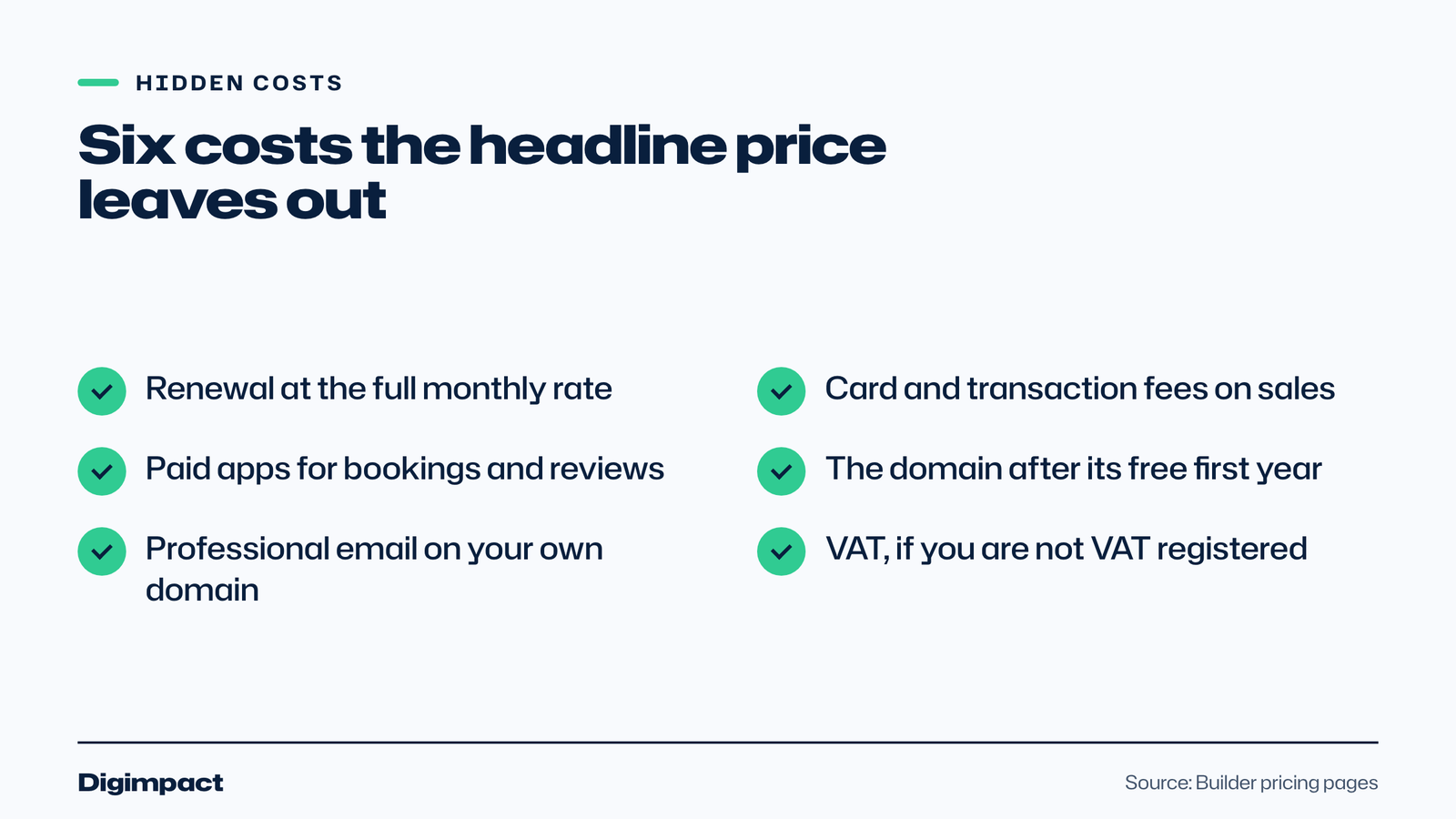
The real cost of a website builder is the renewal price, card and transaction fees, paid apps, the domain after its free first year, VAT if you are not registered, and your own time. Over three years these often add more than the headline plan, so compare the three-year total, not the first month.
The hidden costs to check before you sign up:
- Renewal prices. Introductory deals, especially multi-year ones, renew at the full monthly rate.
- Card and transaction fees. Squarespace Basic adds 2% on store sales, and Shopify adds 2% on Basic if you use another payment provider.
- Paid apps. Booking, reviews, pop-ups and extra forms often come from paid add-ons.
- The domain after year one. Most plans include a domain voucher for one year only.
- Professional email. A name@yourbusiness.co.uk address is usually an extra monthly cost.
- Your time. A weekend of building is not free if it is a weekend you would otherwise be paid for.
When is a website builder the wrong choice?
A website builder is the wrong choice when your site needs features the platform cannot offer well: online table bookings without commission, staff rotas, multiple locations with their own pages, custom quote forms or links into your own systems. It is also wrong when you need to rank in a competitive local market and want full control over speed and structure.
A website builder is a good start for many businesses, and moving later is normal. When a site outgrows its website builder, the move needs planning so you keep your Google rankings and old links. Our page on moving off Wix or Squarespace explains how we handle that, and our guide to what a website costs compares website builders with custom sites at each budget.
How do you choose the right builder in five questions?
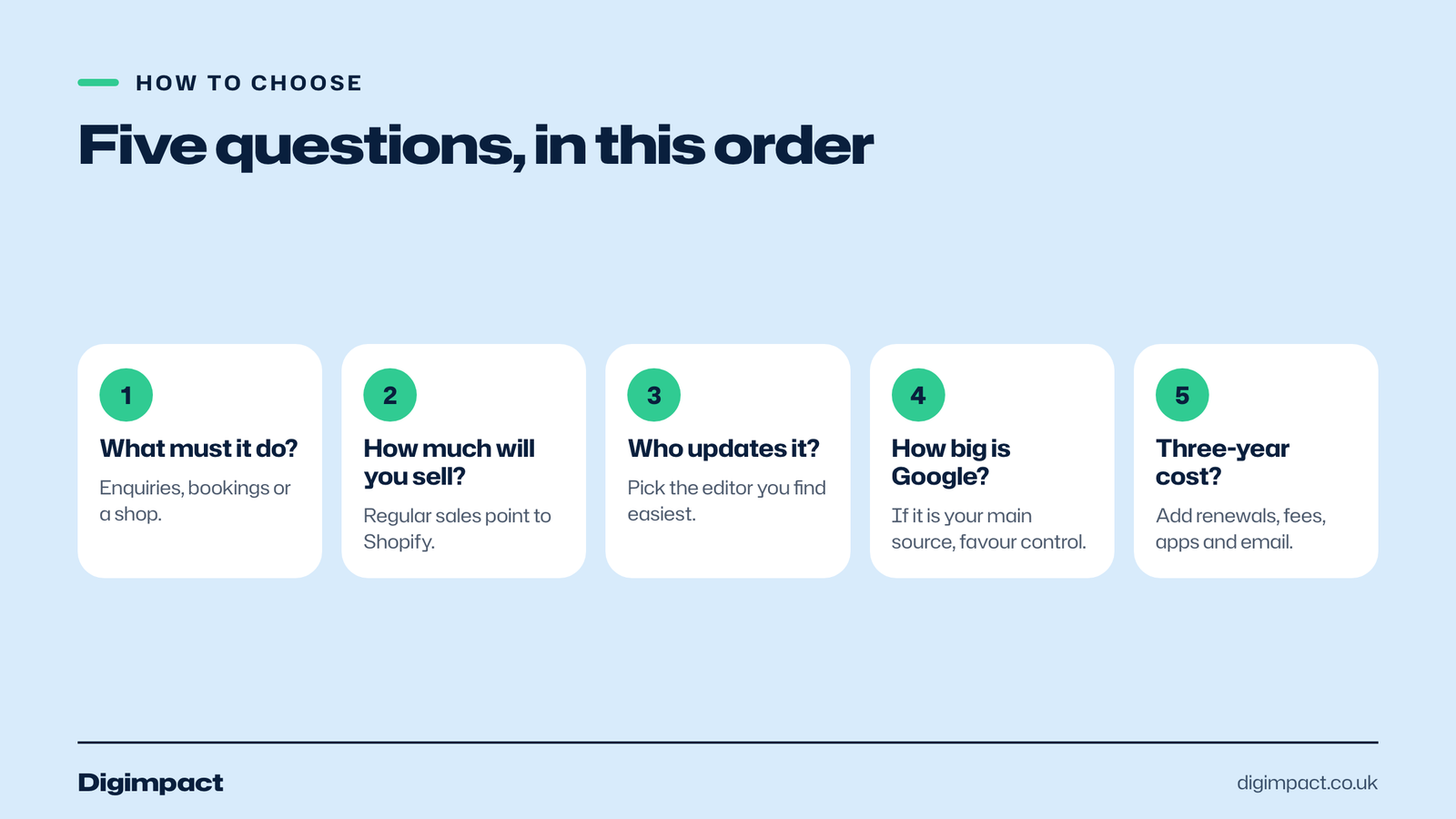
To choose the best website builder for your UK business, answer five questions in order: what the site must do, how much you will sell online, who will update it, how much control you need over Google, and what you can afford over three years. The answers point to one or two options.
- What must the site do? Show services and take enquiries, take bookings, or sell products.
- How much will you sell online? Regular product sales point strongly to Shopify.
- Who will update it? If it is you, choose the editor you find easiest during the free trial.
- How important is Google? If search is your main source of customers, favour control and speed.
- What is the three-year cost? Add renewals, fees, apps, the domain and email.
Want it done for you? See website design in Portsmouth, or web design across Hampshire if you are further out.
Frequently asked questions
What is the cheapest website builder in the UK?
The cheapest paid plans in the UK are WordPress.com Personal at £3 a month on yearly billing and Hostinger Website Builder at about £2.99 a month on a 48-month term, which renews at £10.99 a month. Wix and Squarespace both offer free trials or free versions but charge for a custom domain.
Is Wix or Squarespace better for a small business?
Squarespace is better if you want a polished design with little effort and mainly show your work. Wix is better if you want more layout freedom and plan to add bookings or a shop. At the level most businesses choose, Squarespace Core costs £17 a month and Wix Business £25 a month.
Which website builder is best for SEO?
All the major website builders can rank on Google if the content is useful and the site is fast. WordPress gives the most control over speed, structure and structured data, which helps in competitive local markets. Wix and Squarespace cover the basics well and are harder to get wrong.
Can I move my website from Wix to WordPress later?
Yes, but Wix does not export a site you can install elsewhere, so the pages are rebuilt on WordPress. Done carefully, with redirects from every old address to its new one, you keep your Google rankings. Plan the move for a quiet month and check every page afterwards.
Do I need to pay VAT on website builder plans?
Several website builders show prices before tax. Wix and WordPress.com both state that their listed prices exclude applicable taxes, so VAT is added at checkout for UK buyers. If your business is VAT registered you can usually reclaim it; if not, budget for the extra 20%.
Want a website that does more than a builder?
A website builder is a sensible start for many small businesses, and we will happily tell you if yours is all you need. When you need bookings without commission, pages that rank in your area or a site you fully own, our website design service builds it with a fixed price agreed in writing. Not sure where your current site stands? Run our free website check first.
Related reading: domain and hosting explained and showing the total price and drip pricing rules.
Buy online: a five page website for £300 a year with hosting and domain.
Keep reading
- Email marketing rules UK businesses must follow: consent and the soft opt-in What PECR says about marketing emails and texts in the UK, when you need consent, how the soft opt-in for existing customers works, the different rules for companies and sole traders, and a checklist to stay compliant.
- How long does SEO take? A realistic timeline for UK small businesses, with Google’s own answer How long SEO takes for a UK small business: what Google says today and used to say, what a study of millions of pages found, a realistic four stage timeline, how local SEO differs, and the red flags in any promise of fast rankings.
- How to make Reels for business on a phone, step by step A practical guide to filming Instagram Reels for a local business on a phone: what to film, how long Reels should be, how to edit and caption them, when to post and how to reuse them on other platforms.
Free website check
How does your own website do?
Enter your website and see a quick check on screen in about 20 seconds: speed, Google, phones and the details that win the click. A full written report follows within two working days, free and with no sales call unless you ask.
Want help with this?
Tell us about your business. We reply within one working day with a time for a 30-minute call, and a fixed quote afterwards.
Rather talk now? Call 07551 079787.
Thanks, that is with us.
We will reply within one working day with a time for a call.